Blog
How Independent Play Builds Resilience, Creativity, and Self-Confidence in Young Children
There's a moment most parents recognize: you set up an activity, step back, and watch your child play on their own — really play, without needing direction or reassurance. It's peaceful. It feels right. And it turns out, it's also one of the most developmentally significant things a child can do.
Independent play — the ability to engage with an activity, sustain focus, and navigate challenges without adult involvement — is not just convenient for parents. It's a fundamental developmental skill that shapes how children think, feel, and relate to the world around them. And it's something that can be actively supported, or quietly undermined, by the choices we make in how we structure their play environment.
What Happens in the Brain During Independent Play
When a child plays independently, several important things happen simultaneously. The prefrontal cortex — the region responsible for planning, impulse control, and decision-making — is being exercised. The brain's default mode network, which is active during creative thinking and imagination, is fully engaged. And the child is building what psychologists call "self-efficacy": the deep, experience-based belief that they are capable of figuring things out.
This is markedly different from what happens during adult-directed or screen-based activity. When adults constantly guide play ("now put the red piece here"), they take over the decision-making that should belong to the child. When screens provide continuous stimulation, they eliminate the productive "boredom" that forces the brain to generate its own engagement — which is precisely where creativity originates.
The Three Gifts of Independent Play
Resilience
Independent play is full of small failures: the tower falls, the puzzle piece won't fit, the magnetic animals keep sliding off the board. Each of these micro-frustrations, navigated without adult intervention, builds what researchers call "frustration tolerance" — the ability to stay regulated under pressure and try again.
Children who develop strong frustration tolerance through play approach challenges in school and social situations with a fundamentally different mindset than those who have been shielded from difficulty. They expect problems to be solvable. They know from experience that persistence pays off.
Creativity
Creativity is not a talent — it's a habit of mind that develops through practice. And the specific practice that cultivates it most reliably is open-ended, unstructured play with materials that don't dictate a single correct outcome.
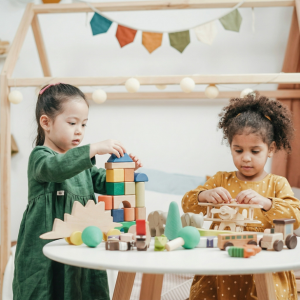
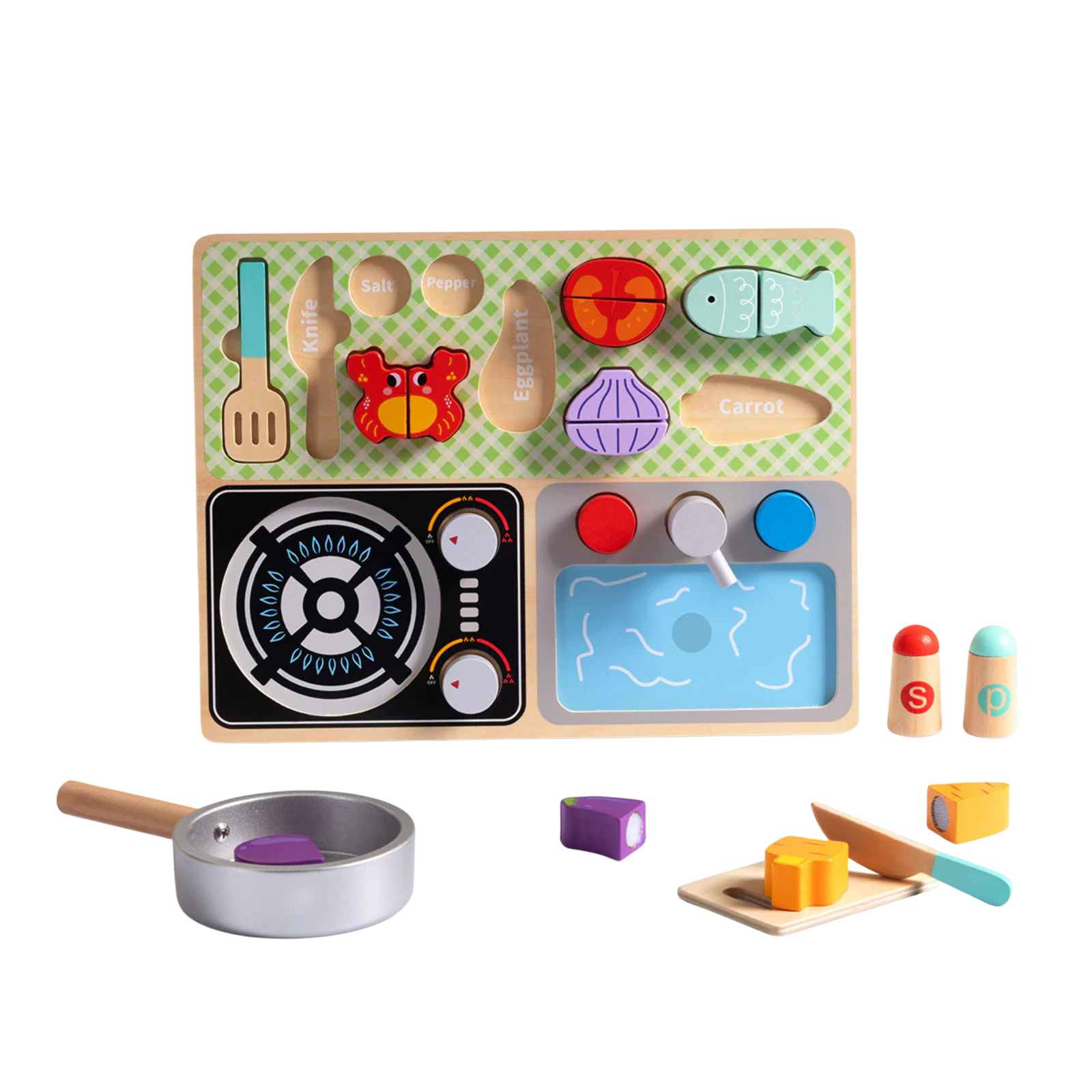
When a child has a wooden block set, a magnetic scene, or a collection of loose puzzle pieces and is left to decide what to do with them, they must exercise genuine creative thinking. Every session is different. Every solution is their own. Over time, this kind of play builds a brain that naturally looks for possibilities rather than waiting to be told what to do.
Self-Confidence
True self-confidence — the kind that holds up under pressure — doesn't come from praise. It comes from competence: from actually doing hard things and discovering you can. Independent play is one of the primary arenas where children build this competence during their early years.
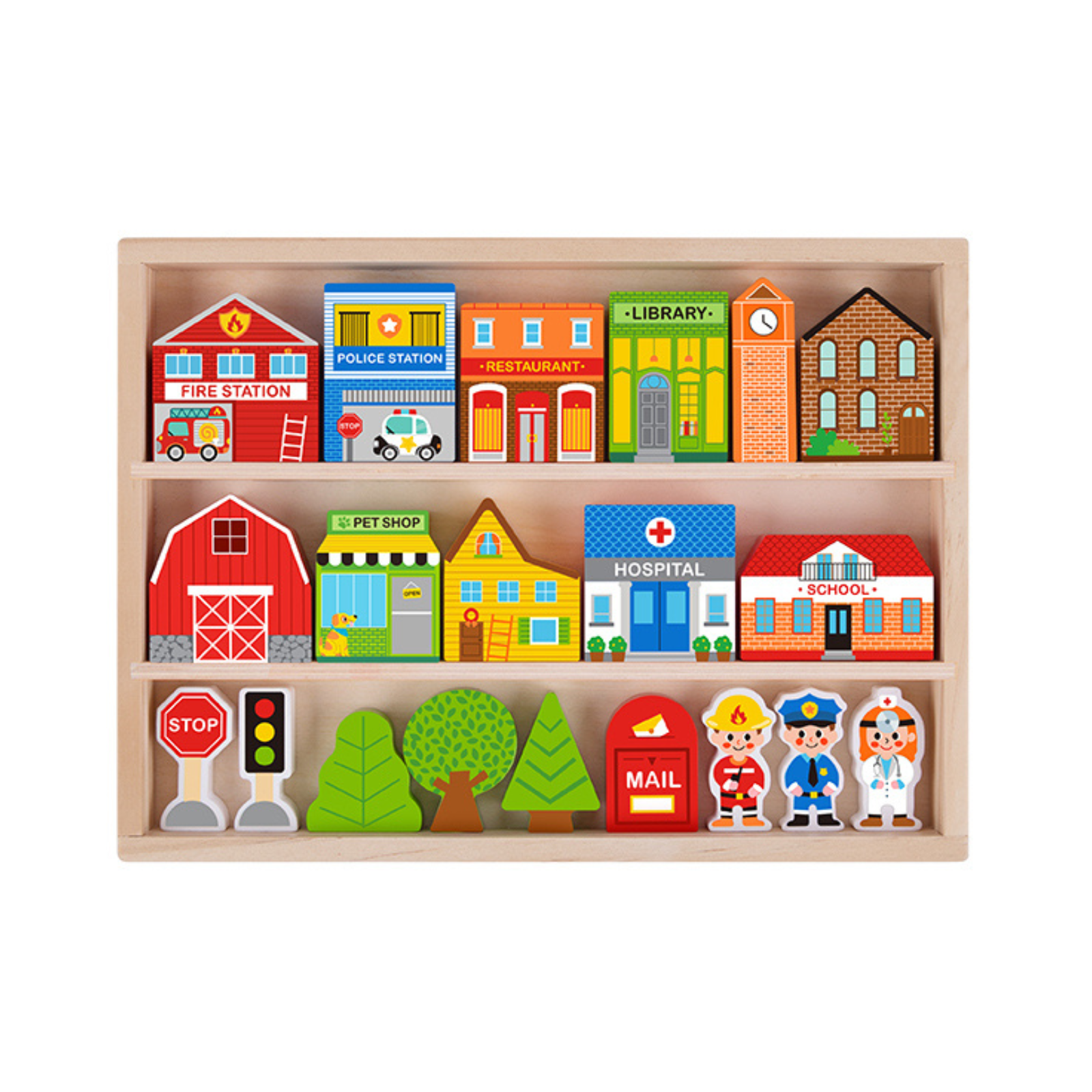
When a child finishes a puzzle independently, balances a stacking tower, or creates an entire pretend world with their wooden figures, they experience genuine achievement. Not achievement-with-help. Not achievement-because-someone-guided-them-to-success. Real, self-generated, unambiguous achievement. That feeling is the foundation of durable confidence.
How to Build Independent Play Into Your Child's Day
Start shorter than you think necessary. For young toddlers, even five to ten minutes of genuine independent play is significant. Extend the window gradually rather than expecting sustained independent play from the start.
Set up before stepping back. Independent play doesn't mean unplanned play. Before you step away, prepare the environment: set out two or three toys intentionally, ensure the space is safe, and give your child a moment to orient before you withdraw your attention. The setup is the scaffolding that makes independence possible.
Choose toys that work without you. Not all toys are equally suited to independent play. Toys that require adult explanation, have complex rules, or only work with multiple players will frustrate rather than support solo play. Look for toys that are immediately accessible, open-ended, and self-correcting — puzzles that only fit one way, balance games with clear feedback, and construction toys where the child's own decisions drive the outcome.
Resist the urge to comment. When your child is playing independently, the instinct to say "oh, that's beautiful!" or "try it this way" is strong. But commentary, even positive commentary, signals that you're watching and evaluating — which subtly shifts the child back into performing for you rather than playing for themselves. The quieter you can be, the more genuinely independent the play becomes.
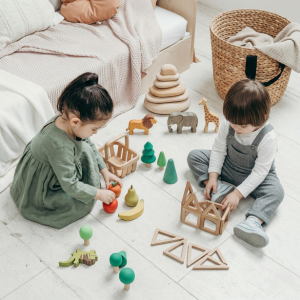
Allow the mess, the repetition, and the apparent pointlessness. A child who has lined up the same ten wooden animals in a row twelve times in a row is not wasting time. They are pursuing a cognitive goal — likely one related to sequence, pattern, or category — with the focused intensity of a scientist running an experiment. Trust the process.
The Long View
The children who play most independently in their early years tend to become the students who can sit with a difficult math problem without immediately raising their hand, the teenagers who pursue interests no one assigned to them, and the adults who approach their work with initiative and confidence rather than waiting for direction.
Independent play isn't a parenting luxury. It's one of the most productive investments you can make in your child's future — and it costs nothing beyond a thoughtfully prepared environment and the willingness to step back.
At Tokiplay, our wooden toys are designed to work beautifully in a child's hands, without you in the room. Explore our full range of open-ended educational toys built for independent play, curiosity, and genuine development.


