Blog
The Montessori Approach to Play: What It Is, Why It Works, and How to Start at Home
You've probably heard the word "Montessori" dozens of times — on toy packaging, in school names, in parenting forums. But behind the label is a genuinely powerful educational philosophy that has been quietly reshaping how we think about childhood learning for over a century. Understanding what it actually means — not just as a marketing term, but as a way of thinking about children — can change how you approach everything from your child's play environment to the toys you choose for them.
Where the Montessori Method Comes From
Dr. Maria Montessori was an Italian physician and educator who began her work in the early 1900s, initially with children who had been written off by the educational establishment of her time. What she discovered — through careful scientific observation rather than theory — was that children have a natural drive to learn, and that this drive is best supported not by instruction, but by environment.
Her central insight: children don't need adults to teach them what to think. They need adults to create the conditions in which their own thinking can flourish. This means prepared environments, freedom within limits, materials that invite exploration, and a deep respect for the child's pace and internal motivation.
The Core Principles — and What They Actually Mean
Prepared Environment
In Montessori philosophy, the environment is considered a teacher. A prepared environment is orderly, scaled to the child's size, and filled with activities that are available to the child at will. At home, this might mean a low shelf where toys are displayed openly rather than stored in bins, so a child can choose, use, and return items independently.
Freedom of Choice
Children are given genuine choice about what to work on and for how long. This isn't permissiveness — it operates within clear boundaries. But within those boundaries, children direct their own learning, which research consistently shows produces deeper engagement and longer retention than adult-directed instruction.
Hands-On, Concrete Learning
Montessori materials are designed to be manipulated physically. Abstract concepts — math, language, spatial relationships — are introduced through objects the child can touch, move, and arrange. This "hands before head" principle reflects what neuroscience now confirms: the brain processes physical experience differently than verbal or visual information, and the learning that comes through the hands tends to be more durable.
Uninterrupted Work Periods
One of the most counter-intuitive aspects of Montessori is the emphasis on sustained, uninterrupted focus. Rather than switching activities every fifteen minutes, children are given long blocks of time to explore a single activity as deeply as they choose. This builds the concentration and executive function that are increasingly identified as critical predictors of long-term success.
What Montessori Play Looks Like at Home
You don't need to enroll your child in a Montessori school to apply these principles. Many of the most valuable Montessori practices require nothing more than a shift in perspective — and the right materials.
Rotate toys instead of overwhelming with choice. A shelf with four to six carefully chosen toys builds focused engagement far better than a toy box overflowing with options. When toys are rotated regularly, familiar ones feel fresh when they reappear.
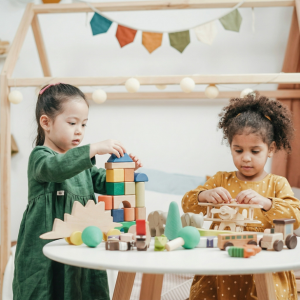
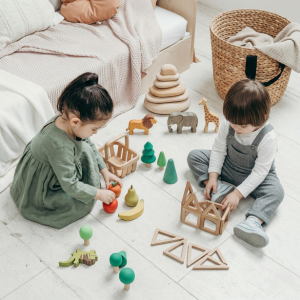
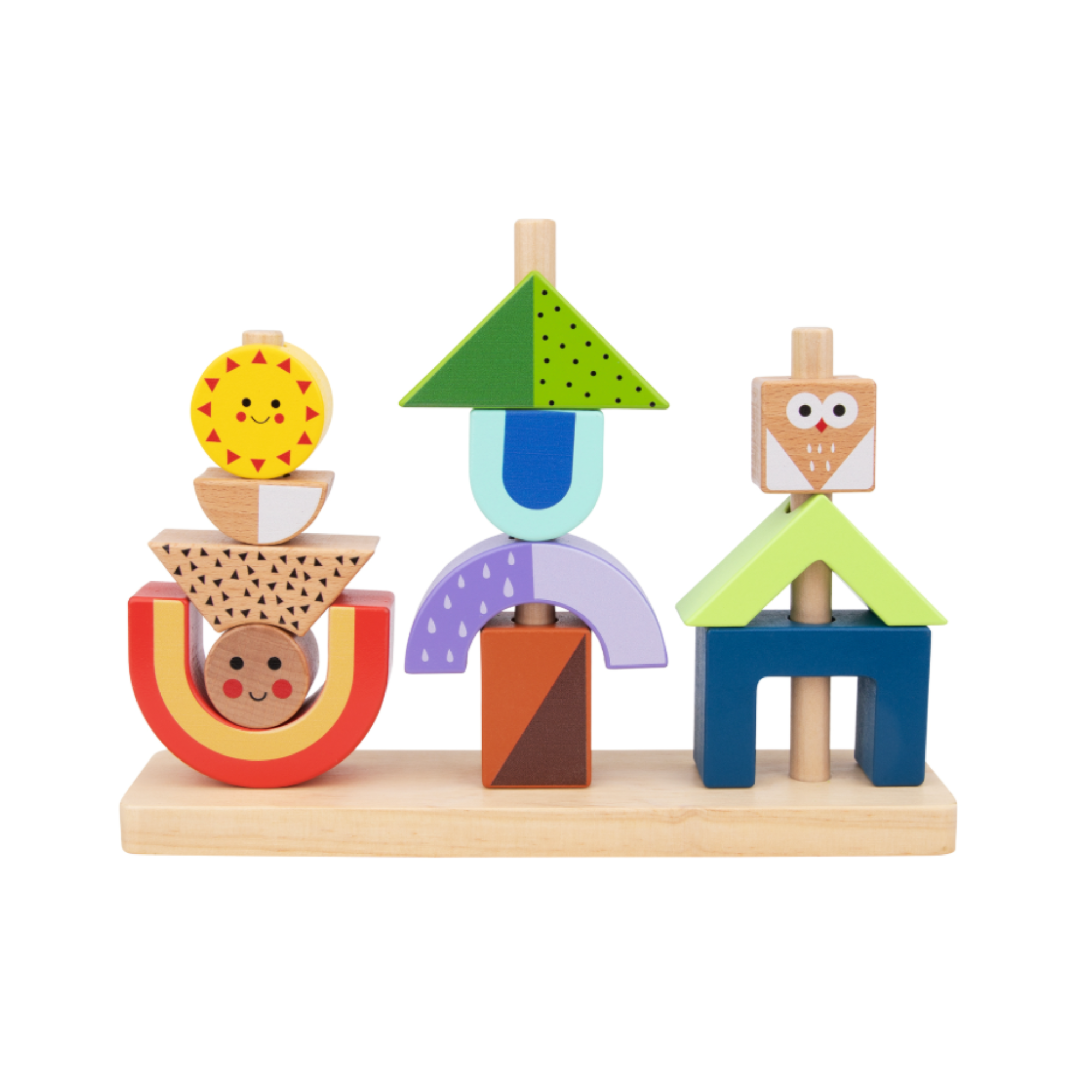
Choose open-ended materials. Toys that can be used in multiple ways — wooden blocks, stacking sets, magnetic pieces, puzzles, natural loose parts — allow children to invent their own challenges rather than follow predetermined paths. This is the heart of Montessori play at home.
Allow struggle. When your child is working on a puzzle and becoming frustrated, the Montessori instinct is to wait before intervening. The moment just before a child solves a problem independently is when the deepest learning happens. Stepping in too quickly removes that moment and signals that the child cannot manage without help.
Follow the child's lead. If your child spends forty minutes arranging and rearranging the same five wooden animals, resist the urge to redirect them. What looks like repetition to an adult is, for a child, a sophisticated process of understanding — building mastery through repetition that is entirely self-directed.
The Role of Toys in a Montessori Home
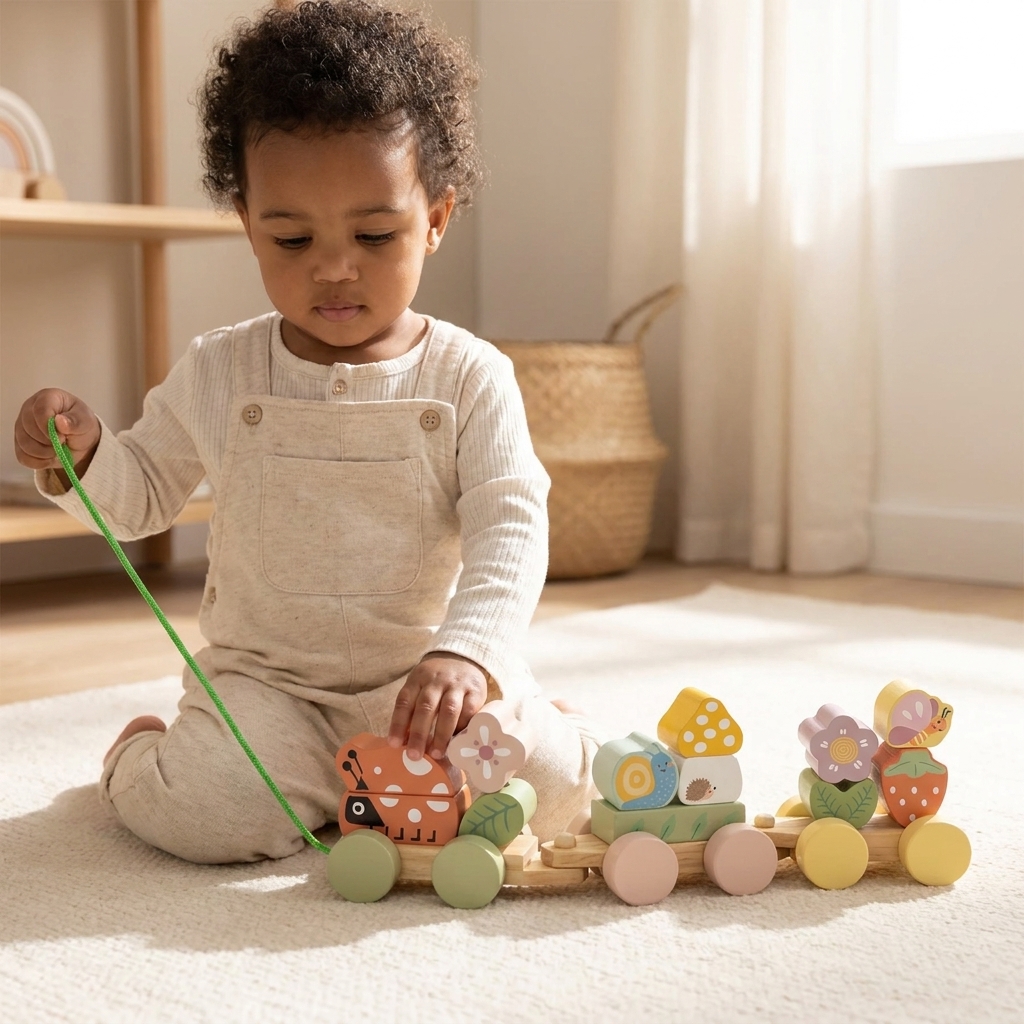
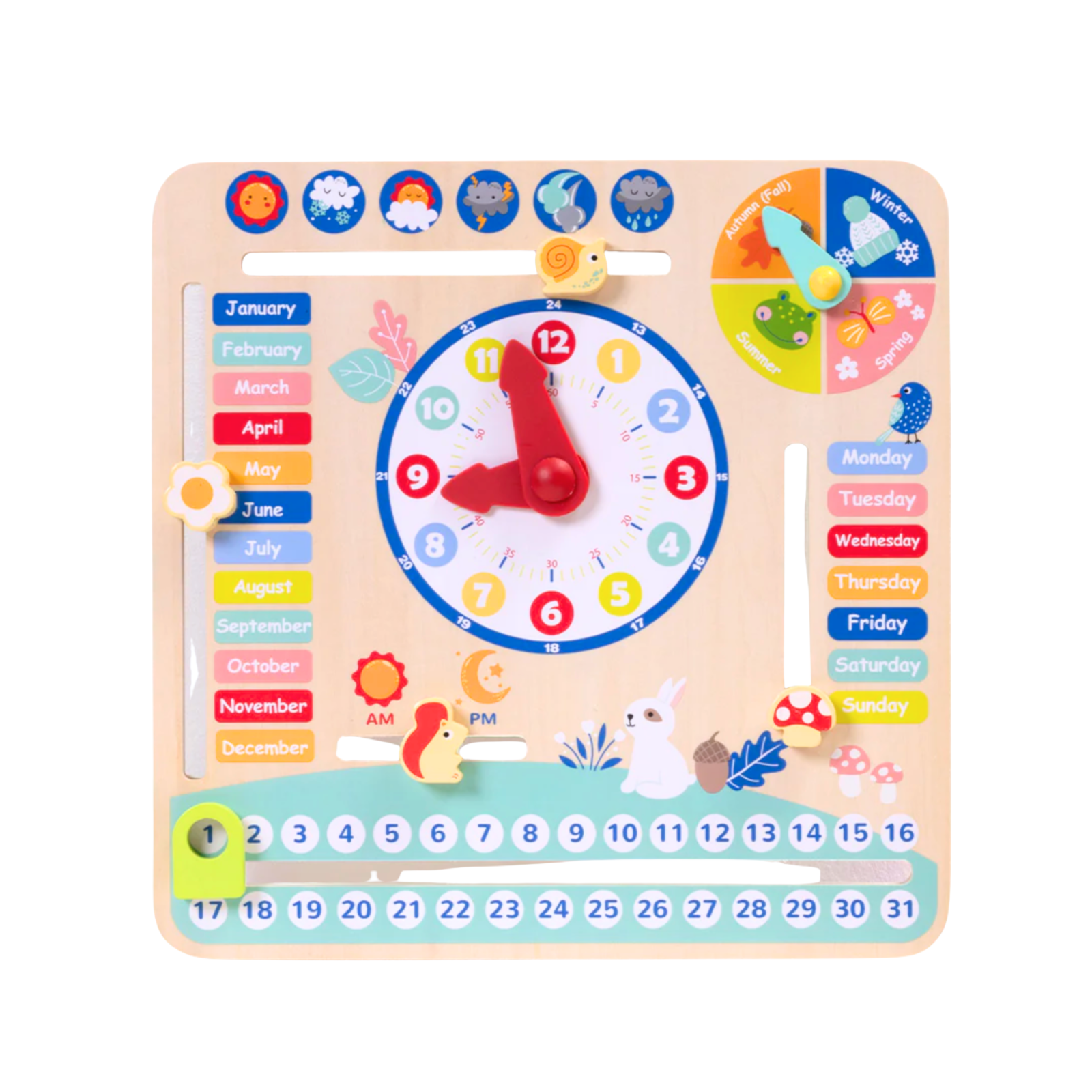
Montessori materials are chosen with intention. They tend to be made from natural materials — wood, fabric, natural fiber — because these provide genuine sensory feedback that plastic cannot. They tend to be realistic rather than fantastical, because concrete, real-world objects connect more directly to a child's lived experience. And they tend to isolate one concept or skill at a time, allowing a child to develop mastery before complexity is introduced.
A wooden puzzle teaches shape recognition. A stacking tower teaches size and sequence. A magnetic play set teaches spatial arrangement and storytelling. None of them beep. None of them tell the child what to do. All of them simply wait for the child to bring them to life — which is exactly where the learning lives.
At Tokiplay, our wooden toys are designed with these principles at their core. Explore our Montessori-inspired collection and discover what it feels like to give your child the gift of genuine, purposeful play.


